Who Is Responsible for Denture Remakes? A Clear Guide for Dental Offices
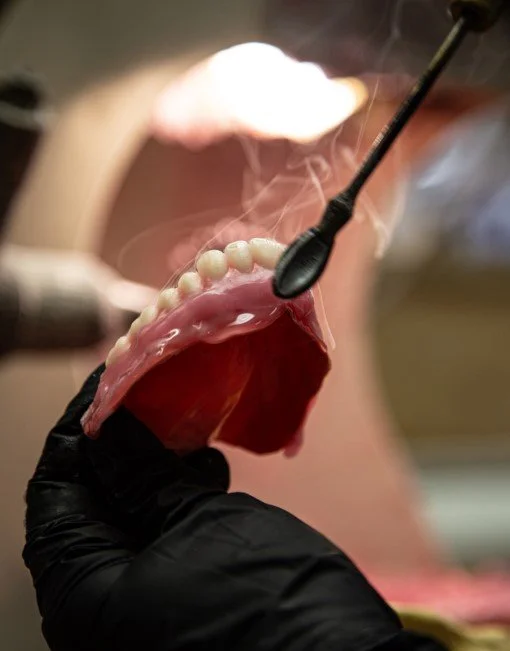
Denture remakes are one of the most frustrating and costly issues for dental offices and dental laboratories alike. Whether the case involves a complete denture, partial denture, or implant-supported prosthesis, a remake impacts chair time, patient satisfaction, and profitability.
When a case cannot be delivered or worn as intended, the first question is often:
Who is responsible?
Understanding the difference between laboratory error and clinical variables in denture fabrication reduces tension, prevents unnecessary remakes, and improves long-term case outcomes.
Let’s break it down clearly.
Why Denture Remakes Happen
Remakes typically occur for one of three reasons:
• Laboratory fabrication error
• Clinical record inaccuracies
• Changes requested after fabrication
The key is determining whether the prosthesis was fabricated incorrectly — or fabricated correctly to the records provided.
In most cases, remakes are not caused by negligence — they are caused by breakdowns in records, communication, or clinical orientation. A clear, documented process protects both the dental office and the laboratory.
The Financial Impact of Remakes on Dental Practices
Remakes increase chair time, delay treatment completion, and reduce overall case profitability. Clear responsibility policies and strong communication protocols help protect production, reduce chair time, and preserve patient satisfaction.
When the Laboratory Is Responsible
A laboratory remake should be completed at no charge when the issue is directly related to a documented lab error. Examples include:
• Deviation from the written prescription or approved records
• Incorrect tooth selection, shade, mold, or material when clearly specified
• Processing defects such as fractures, voids, or delamination
• Setup errors that do not match approved try-in or instructions
In these situations, the laboratory assumes responsibility and covers the remake.
When the Remake Is Clinically Driven
A remake is considered billable when the prosthesis was fabricated correctly to the records provided, but clinical factors prevent successful delivery.
Common examples include:
• Poor impressions (digital or traditional) — including incomplete digital scans
– Incomplete tissue capture
– Distortion, pulls, or voids
– Improper seating during impression or scan
– Missing anatomical landmarks or borders
• Inaccurate or inconsistent bite records
• Changes to vertical dimension or centric relation after fabrication
• Incomplete or conflicting clinical instructions
• Esthetic or phonetic changes requested after setup approval
• Patient-driven changes not identified during try-in
In these cases, the remake reflects new fabrication work — not correction of a laboratory error.
How to Reduce Remakes in Your Practice
Remakes decrease significantly when:
• Full anatomical landmarks are captured
• Impressions are distortion-free
• Vertical dimension and centric relation are preserved
• Clear, detailed prescriptions are submitted
• Questions are clarified before processing
Strong communication between the clinical team and laboratory prevents most remake situations.
Prevention Is Always Better Than Remake
At Denture Crafters, we review every prescription, impression, and digital file before processing begins. If we see incomplete borders, unclear bite records, or inconsistencies in documentation, we proactively contact your team before fabrication starts.
This extra layer of review helps prevent avoidable remakes and protects both your production schedule and your patient experience.
Partner with a Laboratory That Values Transparency
Denture remakes do not have to create friction between the clinical team and the laboratory.
When expectations are documented, records are clear, and communication is proactive, outcomes become predictable.
At Denture Crafters, our focus is simple: fewer remakes, stronger partnerships, and consistent results.
If you have questions before sending a case — whether related to impressions, bite registration, or prescription details — our technicians are available to consult with you prior to fabrication.
Strong partnerships lead to predictable results.
For a complete overview of improving denture outcomes from impression to final fit, read our full clinical guide here.
Start your next case with confidence.
